
Meet the Founder
Hey!
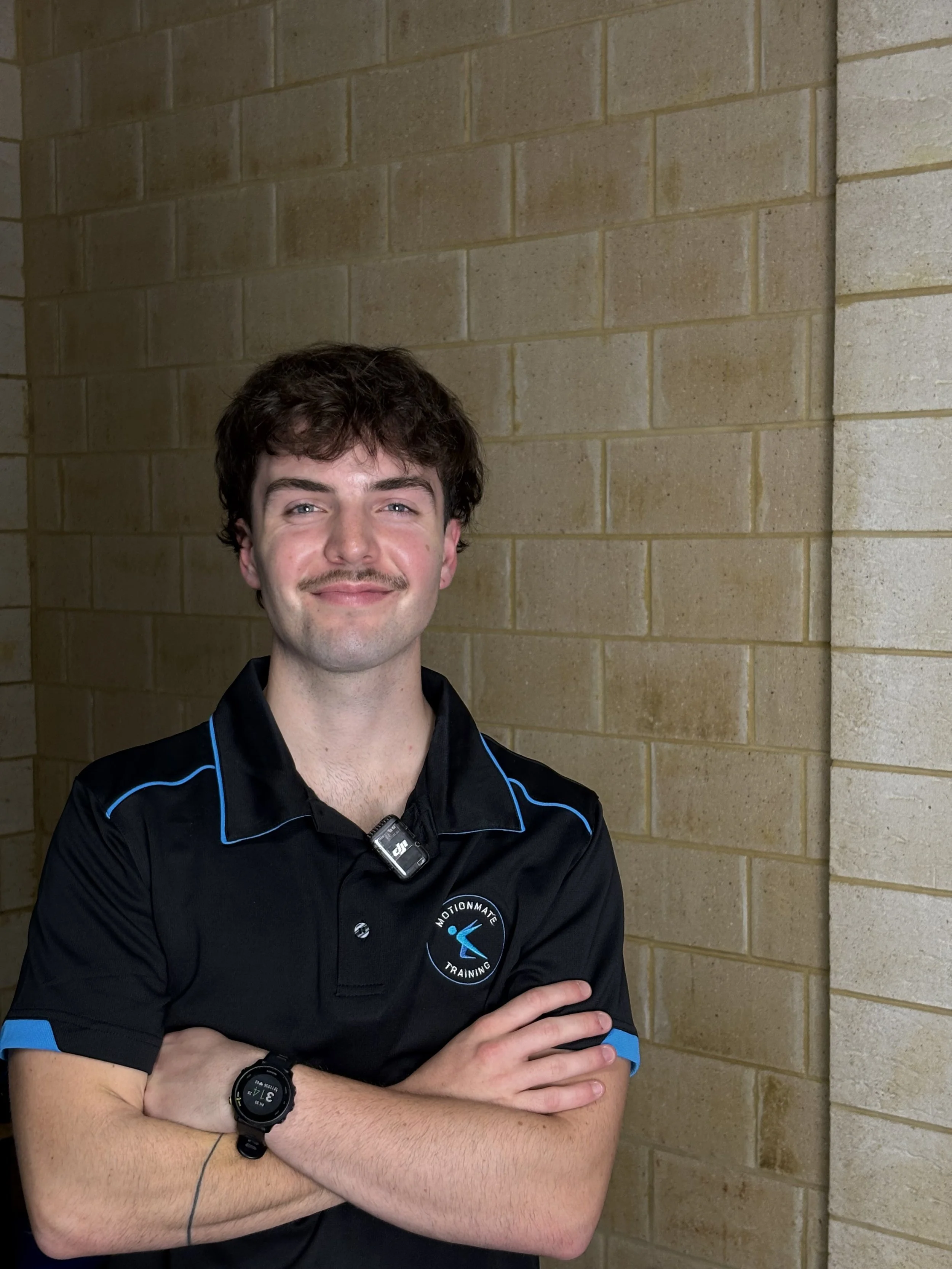
My name is Chad McLean and I am the founder of MotionMate Training.
This business was created based on a deep, personal philosophy that came from real-life events in my childhood.
If you are interested, read below - you won’t regret it.
My Story
MotionMate Training was created from lived experience, not theory.
At nine years old, I was diagnosed with Perthes disease, a rare childhood condition affecting the hip. From ages nine to fourteen, I spent five years in a wheelchair during some of the most important formative years of my life. While my peers played sport, grew physically, and moved forward, my world became smaller and I grew more bitter. During that time, my singular motivator was returning to soccer - something that was my favourite thing to do on Earth and represented normality, belonging, and hope.
At fourteen, after 5 years of what I labelled “missing out,” I finally returned to the field and played competitively for several seasons. Soccer became more than a sport; it was proof that I could still participate, still belong. Some of my favourite childhood memories were created in these years. Then, tragedy, again. I later fractured my already-affected hip during a soccer match, this more than physically broke me - it mentally and emotionally broke me. I spent most of Years 11 and 12 at school on crutches, once again watching from the sidelines as friends continued to develop physically, socially, and athletically.
After 4 major surgeries and years of limited physical activity, the recovery was excruciating, but the emotional weight was even more so. Relearning how to walk, then run, required extensive physiotherapy and persistence to keep going. The process was painful, slow, and often discouraging. Watching others progress while I felt stuck - again - took a significant emotional toll.
From the moment I came off crutches, the following years were defined by pain, trial and error, setbacks, and relentless effort. Progress was never linear. There were periods of improvement followed by intense frustration, doubt, and flare-ups that made me question whether pushing forward was worth it. Yet I kept going, driven by the feeling that I was still chasing the version of myself that had been paused years earlier. I refused to let my circumstances limit me.
During this time, I chose to study physiotherapy, developing a strong affinity for running and paediatrics (working with kids), shaped directly by my experience of childhood disability, long rehabilitation, and delayed physical development.
Eventually and anxiously, I attempted to return to soccer during my university years. The discomfort never truly settled and the intensity of the sport gave me pain in my affected hip, every time I played. Initially, I thought it would just take some getting used to and stayed optimistic; however, I was later advised by my surgeon that continuing to play carried an almost unacceptably high risk of further damage. I was also told that a hip replacement was likely later in life, potentially earlier than average. Being told I should no longer pursue the one thing that had motivated me through years of recovery was devastating.
It was here, in my early 20s, that I almost gave up entirely.
Running entered my life quietly. Initially, it was something I did with my dad on the weekends - no plan, no structure, no expectations - just movement I so desperately desired. It became an emotional outlet, a way to feel free without the same physical or psychological pressure. I ran to cope. I ran to process frustration, grief, and the sense of being left behind.
Over time, I improved. For the first time in my life, I chose to apply myself physically with intent. Growing up disabled had taught me not to expect too much from my body, and avoiding ambition had become a habit. Running slowly dismantled that belief and even gave me a glimpse of hope.
I ran my first marathon in Perth in October 2024, something I never EVER thought I would do. In August 2025, I ran my second marathon in Sydney, improving by 15 minutes to finish in 2:53:08 (sub-3 hours). That race changed my life. It showed me what I was truly capable of when I committed fully, and it shattered many of the limiting beliefs I had carried about my body, my potential, and my place in sport. For the first time, I stopped seeing myself as someone “catching up” and began to see myself as someone capable of pursuing meaningful performance goals - I started seeing myself as someone finally being worthy of respect.
In December 2025, I completed my first ultramarathon, finishing 15th out of more than 200 runners. These outcomes were not about validation - they were evidence of what long-term consistency, intelligent training, and belief can produce.
Running became my freedom. Not just movement, but a reclaiming of autonomy after years of limitation. MotionMate Training was built on this idea: “motion is freedom” - and no one should have to navigate that journey alone.
Today, I help people who feel held back by injury, disability, or diagnosis move toward strength, confidence, and independence - at their own pace and on their own terms. I do not believe in shortcuts or false promises. I believe in patience, process, and progress.
My journey is still ongoing. I am still improving. Through MotionMate Training, I aim to help others improve alongside me - so we can all experience the freedom of movement that is so fundamental to being human.